

BREAKING NEWS


Three children were airlifted after a fire tore through and collapsed Hidden Valley School in Spartansburg
Two students were killed and at least seven other people were injured when a school bus carrying Kenwood Middle School students on a field trip crashed
A sightseeing helicopter carrying a pilot and four passengers crashed near Kalalau Beach on Kauai’s remote Na Pali Coast
A new ambulance placed into service returns Muscatine firefighters to full fleet strength, replacing a unit totaled in a 2025 crash
EXCLUSIVES


SPECIAL REPORTS


UPCOMING & ON-DEMAND EVENTS

These new mitigation strategies help protect vulnerable people and prevent overwhelmed hospitals

The Center for Firefighter Injury Research & Safety Trends webinar will feature panelists discussing opportunities for strengthening EMS systems post-COVID-19

Identify the human factors – fatigue, stress, distraction – that can cause medical errors and change your organization’s culture

The webinar will discuss implications for local EMS leaders and how one state is preparing for a surge in demand for EMS services due to COVID-19

Communication, PPE and decontamination strategies highlighted the 4th FirstWatch and Paramedic Chiefs of Canada COVID-19 webinar

The two-day program will feature sessions on topics such as mental health, telemedicine and community paramedicine in rural areas

Outlining defined goals and metrics through strategic planning prevents medical errors from reaching patients in the prehospital environment

Learn how communities across the country are leveraging community paramedicine and mobile integrated health for better patient care

Public safety professionals of all ranks and positions can learn to convey messages of hope and resiliency

Behind the effort to update the 2009 National EMS Education Standards and what it means for the industry

The team is also hosting a tutorial webinar about the RFA Online Portal, which will review functionality, and provide guidance and tips for EMS agencies and providers

Learn more about the trends that are shaping the field of EMS from our discussion of the 2019 EMS1 Trend Report
INDUSTRY INSIGHTS

For New Jersey’s JFK EMS, a mobile-first strategy boosts accuracy, speeds documentation and strengthens quality improvement efforts

The treatment has evolved to be one of the most effective and evidence-based treatments for trauma

Whether in virtual reality or on a web browser, first responders can practice medical and behavioral health scenarios in a safe, realistic environment
Harnessing next-generation clinical guidance to reduce chaos and enhance confidence for EMS providers

From unit assignment to nonemergent scheduling, this software solution can help call centers and EMS agencies manage staffing shortages and growing demand


OFF DUTY

Is the 75 Hard health and fitness challenge to boost mental discipline and physical fitness right for you?

Whether you’re starting from scratch or looking to enhance your existing routine, these free tools can help you stay fit and ready for the demands of your job

How to prioritize your financial goals and put your overtime pay to good use

Keep your new tattoo safe, clean and vibrant with these nine tips tailored for tough environments

Which of these viral TikTok fitness trends will you try next?

There is more than one way to make an impact on your friends’ and neighbors’ wellbeing

Discover practical strategies for public safety leaders to stay grounded, manage stress and inspire their teams during life’s toughest challenges

The habits we learn to care for ourselves and others go with us off-duty into our personal lives

Get your stocking stuffers, favorites and more while the deals are still live!

Healthy, portable, delicious choices for quick fueling
PRODUCT RESEARCH CATEGORIES
The EMS1 EMS Automated CPR product category is a collection of products and information for researching Automated Cardiopulmonary Resuscitation (CPR) products. It covers a variety of Automated External Defibrillators (AEDs), training tools and other resuscitation products.

The Software product category features information, product listings and resources for researching EMS software solutions and covers a variety of software products such as billing, field data and scheduling software, as well as computer-aided dispatch (CAD) and electronic patient care reporting (ePCR).
The EMS1 Billing Software product category features information and resources for researching Billing Software for your agency, including resources for data management software programs and systems available today.

The Online Training product category features products and information for researching EMS online training and covering a variety of products and services, including training programs/courses available online.

The EMS Education product category features information and resources for researching EMS education, including tools, products, news articles and more.
Training simulators are key tools for building EMS skills through realistic, scenario-based learning. This topic covers high- and low-fidelity simulators used to practice airway management, trauma care, cardiac response, and other critical interventions. Simulators help EMS personnel improve decision-making, teamwork, and clinical performance in a controlled environment. They also support certification, recertification, and ongoing education. For additional resources used in EMS training, see Training Equipment & Supplies. Explore the articles in this topic to learn how simulators enhance the quality and effectiveness of EMS training programs.
Patient monitoring plays a critical role in prehospital care, enabling EMS providers to track vital signs, assess patient condition, and detect changes in real-time. Monitoring tools include ECG, pulse oximetry, capnography, and blood pressure tracking. These systems support timely decision-making during transport and handoff to hospital teams. Integrated patient monitoring improves documentation accuracy, care continuity, and patient outcomes. Training on device use and data interpretation is essential. EMS Software is another important topic that explores broader tools used in the field. Explore the articles below for guidance on patient monitoring equipment, protocols, and best practices.
Dispatch, call centers, and 911 systems are critical components of emergency response. These operations manage call intake, resource allocation, and communication between dispatchers and field units. Efficient systems and well-trained staff help ensure accurate information, quick response times, and coordinated incident management. Technology like CAD, AVL, and integrated radio systems enhances performance and situational awareness. Dispatch, call centers & 911 services must follow state and national standards for operations and training. Emergency Communications is another important topic focused on tools and infrastructure for responder connectivity. Explore the articles below for insights into staffing, protocols, and system improvements.
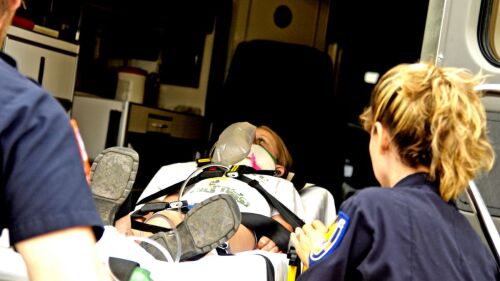
The EMS1 Capnography product category features products and information for researching capnography’s use by EMS personnel to aid in their assessment and treatment of patients in the prehospital environment. Click here to download a guide to normal/abnormal capnography waveforms.
Narcotics inventory management is essential for tracking controlled substances used by fire and EMS agencies. Effective systems help ensure accountability, prevent diversion, and maintain compliance with DEA regulations. Digital solutions support secure storage, chain-of-custody documentation, automated logging, and audit readiness. Proper narcotics inventory management also reduces errors and streamlines the restocking process. Agencies should establish clear policies, provide practical training, and maintain thorough oversight.