

BREAKING NEWS


More than 100 paramedics staffed the three-day event, using foot teams to reach and treat patients in dense crowds
Weeks after suffering a massive heart attack at home, Shayne South returned to Lynchburg Fire Station 7 to thank the firefighters and paramedics who revived him and rushed him to lifesaving treatment
Rosendale police said a loaded tri-axle dump truck lost control and flipped onto an oncoming vehicle, trapping three people inside
Officers made two calls for EMS before transporting the 22-year-old themselves during a medical emergency
EMS providers debate whether making IV acetaminophen the first-line option improves patient care or limits provider judgment
EXCLUSIVES


SPECIAL REPORTS


UPCOMING & ON-DEMAND EVENTS

Learn how innovations are being made in treating respiratory emergencies

Learn how technology will shape the future of public safety operations, based on results of the second annual Verizon Frontline Public Safety Communications survey

Action items to advance operations, adapt service delivery, and recruit and retain the talent of the future

Esteemed fire chief and EMS lieutenant share lessons learned from community paramedicine program

MCHD’s Sean Simmonds shares decontamination best practices

How to apply for grant funding for naloxone and opioid-reversal interventions and more

EMS training in bleeding control must incorporate mass casualty incident plans and drills as well as the need to prioritize patient triage by injury severity, transport priority and the type of treatment – layperson or medical professional – that is required.

An overview of the current evidence.

View this virtual tabletop webinar to help prepare you to respond to the next mass casualty incident in your jurisdiction

Data collected on evidence-based measures informs this discussion meant to inspire further quality improvement by pairing specific metrics with practical recommendations

Ward off burnout and turnover by increasing career resiliency and opportunity

5 ways to expand your options and forge your EMS career
INDUSTRY INSIGHTS

Whether in virtual reality or on a web browser, first responders can practice medical and behavioral health scenarios in a safe, realistic environment

The treatment has evolved to be one of the most effective and evidence-based treatments for trauma

Work smarter, document faster and submit with confidence

Cumbersome and costly testing methods have long challenged first responders – this product changes that

A quick guide to the benefits and factors that should shape your choice
WATCH NOW

Chris and Kelly are in a stand-off; is field experience a foundation … or just bad habits in disguise?


OFF DUTY
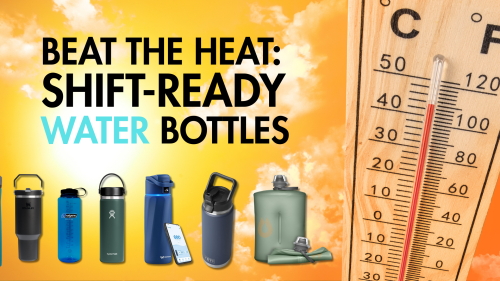
Insulated, smart, and high-capacity bottles designed to help first responders beat dehydration on shift and beyond

What they’ll never tell you about why we stay

I lived to retire from the ambulance company

Summer is great for a lot of activities, but sometimes the heat can put a damper on your workout ambitions

When employees are happy, engaged and productive, and the organization is meeting their individual needs, they are more likely to meet their full potential

Firearms instructor Todd Fletcher went from a competitive power lifter to a retiree managing pre-diabetes and high blood pressure, showing the impact of shift work on wellness

From smartwatches to hydration, here are four mission-ready picks to help you build strength, regulate stress and stay fit for the job — and for life

Score discounted duty gear, workout tools and everyday essentials July 8-11 with our curated list of budget-friendly buys

The series offers a window into the experiences of first responders through the use of real stories from real law enforcement officers, firefighters and EMTs
PRODUCT RESEARCH CATEGORIES

The EMS1 Personal Protective Equipment (PPE) product category features products and information for researching EMS PPE, covering apparel, helmets, gloves, boots, outerwear and other equipment needed for safe and efficient emergency response.

The EMS1 EMS Body Camera product category is a collection of information, product listings and resources for researching Body-Worn Camera equipment and accessories for EMS providers.
Records management software helps EMS agencies document, store, and access critical data related to patient care, operations, and compliance. This topic includes electronic patient care reporting (ePCR) systems, incident reporting tools, and data integration platforms. Effective records management supports accurate documentation, ensures quality assurance, facilitates billing, and promotes regulatory compliance. Choosing the right software can streamline workflows and improve data security. For equipment used to collect patient data in the field, see Diagnostic Equipment. Explore the articles in this topic to learn how software solutions support efficient EMS documentation and reporting.
Ambulances and specialty vehicles are crucial for delivering emergency medical services (EMS) in diverse environments, ranging from urban settings to remote areas. This topic covers vehicle types, configurations, design standards, and customization options for specific missions such as critical care transport, bariatric response, and tactical EMS. Understanding the capabilities and limitations of different vehicles enables agencies to select the most suitable platform for their specific needs. Vehicle safety, maintenance, and procurement are also explored. For details on enhancing vehicle functionality, see Ambulance Accessories. Explore the articles in this topic to learn more about selecting and managing EMS response vehicles.

The EMS1 Ventilation product category features information, product listings and resources for researching mechanical ventilation.

The EMS1 Inventory & Asset Management Software product category features information, product listings and resources for researching Inventory Management.
Patient monitoring plays a critical role in prehospital care, enabling EMS providers to track vital signs, assess patient condition, and detect changes in real-time. Monitoring tools include ECG, pulse oximetry, capnography, and blood pressure tracking. These systems support timely decision-making during transport and handoff to hospital teams. Integrated patient monitoring improves documentation accuracy, care continuity, and patient outcomes. Training on device use and data interpretation is essential. EMS Software is another important topic that explores broader tools used in the field. Explore the articles below for guidance on patient monitoring equipment, protocols, and best practices.
Wellness program software helps fire departments manage health and wellness initiatives for firefighters. These tools support tracking of physical fitness, behavioral health, peer support, medical assessments, and return-to-duty readiness. Wellness program software also helps agencies analyze participation, trends, and outcomes to improve program effectiveness. It supports compliance with NFPA standards and other firefighter health guidelines. Investing in firefighter wellness reduces injuries, sick leave, and burnout.
Dispatch, call centers, and 911 systems are critical components of emergency response. These operations manage call intake, resource allocation, and communication between dispatchers and field units. Efficient systems and well-trained staff help ensure accurate information, quick response times, and coordinated incident management. Technology like CAD, AVL, and integrated radio systems enhances performance and situational awareness. Dispatch, call centers & 911 services must follow state and national standards for operations and training. Emergency Communications is another important topic focused on tools and infrastructure for responder connectivity. Explore the articles below for insights into staffing, protocols, and system improvements.
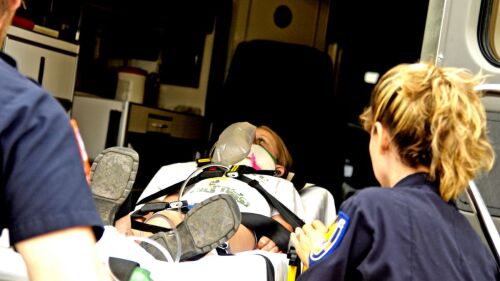
The EMS1 Capnography product category features products and information for researching capnography’s use by EMS personnel to aid in their assessment and treatment of patients in the prehospital environment. Click here to download a guide to normal/abnormal capnography waveforms.