

BREAKING NEWS


A Seattle woman waited more than 10 hours for a nurse-ordered ambulance, raising concerns about the city’s 911 nurse triage system and response standards.
A public feud in Clinton Township is raising questions about EMS response models, as officials push for more EMT-based responses while firefighters warn reducing paramedic staffing could cut advanced care
Allegheny General Hospital staff simulated a mass shooting response to prepare for potential large-scale emergencies during next month’s NFL Draft
North Ridgeville Fire Department partnered with University Hospitals’ Tactical Emergency Casualty Care team for two days of training focused on active shooter and mass-casualty responses
Lawmakers and EMS leaders are pushing to honor Pittsburgh’s Freedom House Ambulance Service with one of the nation’s highest civilian awards
EXCLUSIVES


SPECIAL REPORTS


UPCOMING & ON-DEMAND EVENTS
Harnessing next-generation clinical guidance to reduce chaos and enhance confidence for EMS providers
Empower personnel to step in early — before issues escalate
Lessons from agencies mastering real-time collaboration under pressure

End the burnout cycle with proven initiatives to create a more sustainable EMS culture

This informative webinar will provide key information on how two public safety agencies (one police and one fire) funded comprehensive smartphone programs that provided issued devices to all personnel.

Hear from survey investigators as they share data-driven strategies to improve EMS documentation across agencies

Get the insights, expert advice and tools to help your agency score big on grants

How technology can mitigate diversion and ensure compliance
The assessment sequence that could save lives — Are you using it?
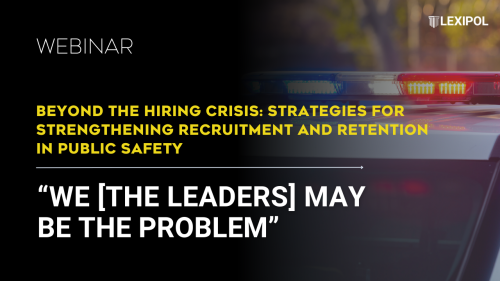
Learn how public safety agencies can overcome recruitment roadblocks with real-world strategies rooted in leadership, transparency and cultural change

Learn why outcome-based leadership is crucial for making meaningful changes in your agency and community

Discover why the departments that treat recruiting like marketing are winning — and how to follow their lead
INDUSTRY INSIGHTS

From unit assignment to nonemergent scheduling, this software solution can help call centers and EMS agencies manage staffing shortages and growing demand

How NarcBox can help EMS agencies prepare for stricter controlled-substance accountability

Small changes to how EMS approaches airway management and ventilation can make big differences in OHCA outcomes

The resulting device can help ensure first-pass success even in difficult airways

Turnover in your billing office may reveal where reimbursement relies on memory instead of documented process
WATCH NOW

After a traumatic injury, K-9 Kona’s airborne rescue led to a statewide medevac program ensuring New Jersey police — two legs or four — are protected when seconds count


OFF DUTY

On this episode, our co-hosts discuss legislation that is being introduced that would make the use of ketamine as a means to incapacitate a criminal suspect a crime

How to let each other know that a fellow medic has died and process the death collectively

Daniel O’Beirne and Jordan Reed, two strangers with fire and EMS backgrounds, worked together to save a driver whose semi-truck struck a pole and burst into flames

From a marathon runner who performed CPR on the course to a college student who stopped class to help his professor, these EMS providers stepped up to render aid in unexpected circumstances

Reflecting on why other officers didn’t speak up during George Floyd’s detainment

Know when to stop, how much assistance to provide and how to hand off patient care to responding authorities

Carry a small personal aid kit with you at all times to treat the aches, cuts and scrapes you are most likely to experience yourself or need to treat in friends and family
What ePCR phrases or terms do you use to describe everyday events, injury or illness while you are off-duty?
Looking for a gift, a weekend read, or a resource? Check out our recent favorites
Getting an EMS tattoo? We can’t stop you, but try not to make these mistakes
PRODUCT RESEARCH CATEGORIES
The EMS1 EMS Automated CPR product category is a collection of products and information for researching Automated Cardiopulmonary Resuscitation (CPR) products. It covers a variety of Automated External Defibrillators (AEDs), training tools and other resuscitation products.

The Software product category features information, product listings and resources for researching EMS software solutions and covers a variety of software products such as billing, field data and scheduling software, as well as computer-aided dispatch (CAD) and electronic patient care reporting (ePCR).
The EMS1 Billing Software product category features information and resources for researching Billing Software for your agency, including resources for data management software programs and systems available today.

The Online Training product category features products and information for researching EMS online training and covering a variety of products and services, including training programs/courses available online.

The Field Data Software product category is a collection of information and resources for researching EMS Field Data Software, including types of software, hardware, and reporting solutions that allow you to collect and track data while out on a call.

The EMS1 Station product category features products and information for researching EMS facilities and supplies, and covers a variety of products and services, including furniture, chairs, couches, sofas and facility furniture.

The EMS Education product category features information and resources for researching EMS education, including tools, products, news articles and more.
Training simulators are key tools for building EMS skills through realistic, scenario-based learning. This topic covers high- and low-fidelity simulators used to practice airway management, trauma care, cardiac response, and other critical interventions. Simulators help EMS personnel improve decision-making, teamwork, and clinical performance in a controlled environment. They also support certification, recertification, and ongoing education. For additional resources used in EMS training, see Training Equipment & Supplies. Explore the articles in this topic to learn how simulators enhance the quality and effectiveness of EMS training programs.
Patient monitoring plays a critical role in prehospital care, enabling EMS providers to track vital signs, assess patient condition, and detect changes in real-time. Monitoring tools include ECG, pulse oximetry, capnography, and blood pressure tracking. These systems support timely decision-making during transport and handoff to hospital teams. Integrated patient monitoring improves documentation accuracy, care continuity, and patient outcomes. Training on device use and data interpretation is essential. EMS Software is another important topic that explores broader tools used in the field. Explore the articles below for guidance on patient monitoring equipment, protocols, and best practices.
Dispatch, call centers, and 911 systems are critical components of emergency response. These operations manage call intake, resource allocation, and communication between dispatchers and field units. Efficient systems and well-trained staff help ensure accurate information, quick response times, and coordinated incident management. Technology like CAD, AVL, and integrated radio systems enhances performance and situational awareness. Dispatch, call centers & 911 services must follow state and national standards for operations and training. Emergency Communications is another important topic focused on tools and infrastructure for responder connectivity. Explore the articles below for insights into staffing, protocols, and system improvements.