

BREAKING NEWS


Iredell County rescuers and partner agencies trained inside the historic battleship, using its tight compartments and steep ladders to simulate complex technical rescue scenarios
Brian Thomas agreed to pay the county $1, drop his counterclaim and make several admissions, ending a legal dispute over his 2024 resignation
Clark County Commissioners approved a four-year extension that freezes current rates, adds two ambulances and expands Heartland Ambulance EMS services without increasing taxpayer costs
Authorities said a man, believed to be armed with a knife, ran towards a Kanawha County EMS ambulance, leapt onto the hood and later died after falling from the rig
San Antonio police said a welfare check escalated when a woman allegedly struck a firefighter with a knife before barricading herself inside an apartment
EXCLUSIVES


SPECIAL REPORTS


UPCOMING & ON-DEMAND EVENTS

Practical strategies to build influence, engage policymakers and drive meaningful industry change

Work smarter, document faster and submit with confidence
Learn how public safety agencies can overcome recruitment roadblocks with real-world strategies rooted in leadership, transparency and cultural change
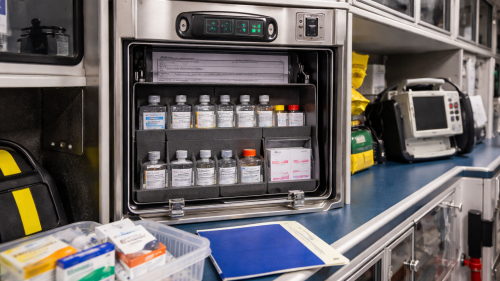
What the rule changes mean for EMS and how agencies can reduce risk, lighten administrative burden and support better patient care

Harnessing next-generation clinical guidance to reduce chaos and enhance confidence for EMS providers
Empower personnel to step in early — before issues escalate

Lessons from agencies mastering real-time collaboration under pressure

End the burnout cycle with proven initiatives to create a more sustainable EMS culture

This informative webinar will provide key information on how two public safety agencies (one police and one fire) funded comprehensive smartphone programs that provided issued devices to all personnel.

Hear from survey investigators as they share data-driven strategies to improve EMS documentation across agencies

Get the insights, expert advice and tools to help your agency score big on grants

How technology can mitigate diversion and ensure compliance
INDUSTRY INSIGHTS

Whether in virtual reality or on a web browser, first responders can practice medical and behavioral health scenarios in a safe, realistic environment

Survey data reveals why resilient communications are becoming essential to response effectiveness, personnel safety and patient care

The treatment has evolved to be one of the most effective and evidence-based treatments for trauma

A quick guide to the benefits and factors that should shape your choice

Cumbersome and costly testing methods have long challenged first responders – this product changes that
WATCH NOW

Clinicians discuss the accuracy of the Broselow tape and what modern tools can support safer pediatric care.


OFF DUTY

According to EMS1 data, EMTs are 1.23 times more likely than other consumers to have a credit card. Are you selecting the correct one?

EMS leaders and field personnel need to intensify the conversation about this very serious issue
PRODUCT RESEARCH CATEGORIES

The Financial, Insurance & Legal Services product category features information and resources for researching Financial Services solutions, as well as insurance options and legal resources, and includes financial leasing options, various types of insurance, mortgage tools and retirement planning assistance.

The Software product category features information, product listings and resources for researching EMS software solutions and covers a variety of software products such as billing, field data and scheduling software, as well as computer-aided dispatch (CAD) and electronic patient care reporting (ePCR).

The EMS1 Station product category features products and information for researching EMS facilities and supplies, and covers a variety of products and services, including furniture, chairs, couches, sofas and facility furniture.

The EMS Education product category features information and resources for researching EMS education, including tools, products, news articles and more.

The EMS1 Patient Handling product category features products and information for researching EMS patient handling equipment, including stretchers, stair chairs, immobilization equipment, infection control and other tools for successful patient handling, lifting and moving.
Training equipment and supplies are essential for preparing EMS providers to perform critical skills safely and effectively. This topic encompasses manikins, simulation devices, task trainers, and consumable materials used in skills labs and continuing education programs. Quality training tools support realistic scenarios, hands-on practice, and competency-based assessments. Keeping training equipment current and well-maintained ensures providers are ready for real-world emergencies. For tools used during actual patient care, see Diagnostic Equipment. Explore the articles in this topic to learn how training resources support EMS education and readiness.
EMS gear supports the safety, mobility, and performance of emergency medical personnel in the field. This topic includes uniforms, footwear, outerwear, bags, belts, and protective equipment designed for daily operations and challenging environments. Proper gear improves comfort, durability, and readiness while meeting safety and agency standards. Selecting the right equipment can help reduce fatigue and minimize the risk of injury during demanding calls. For tools used during patient assessment and treatment, see Diagnostic Equipment. Explore the articles in this topic to learn more about selecting and maintaining gear that meets the needs of today’s EMS professionals.
Diagnostic equipment enables EMS providers to assess patient conditions quickly and accurately in the field. This topic encompasses various tools, including pulse oximeters, ECG monitors, capnography devices, glucometers, and blood pressure monitors. Effective use of diagnostic equipment supports clinical decision-making, guides treatment, and improves patient outcomes. EMS professionals must stay informed about new technologies, device features, and maintenance requirements to ensure optimal performance. For related tools used during transport and care, see Ambulance Disposable Supplies. Browse the articles in this topic to learn how diagnostic equipment supports prehospital assessment and care delivery.
Training simulators are key tools for building EMS skills through realistic, scenario-based learning. This topic covers high- and low-fidelity simulators used to practice airway management, trauma care, cardiac response, and other critical interventions. Simulators help EMS personnel improve decision-making, teamwork, and clinical performance in a controlled environment. They also support certification, recertification, and ongoing education. For additional resources used in EMS training, see Training Equipment & Supplies. Explore the articles in this topic to learn how simulators enhance the quality and effectiveness of EMS training programs.
Ambulance accessories play a key role in supporting EMS providers during emergency response, patient transport, and on-scene care. This topic covers essential tools and equipment such as oxygen storage systems, interior lighting, stretcher mounts, communication devices, and safety restraints. Reliable ambulance accessories help improve efficiency, protect patients and crew, and maintain readiness for all types of calls. Understanding what accessories are available—and how to use them—can support better outcomes in the field.