

BREAKING NEWS


Badger EMS, a student group at UW-Madison, wants to handle lower-acuity campus calls, saying the program would expand hands-on experience while easing demand on local ambulances
Grapevine city leaders say a smaller squad unit will better handle rising EMS calls, while firefighters warn the change could impact fire response capabilities
EMS crews could see longer transports and fewer local resources as rural hospitals weigh service reductions under a new federal funding program
In a first for the University of Washington’s alternative spring break program, students shadowed Longview Fire Department EMTs and 911 dispatchers to explore pre-hospital emergency care
A cybersecurity incident knocked out key systems, canceling chemotherapy appointments, closing pharmacies and pushing Brockton Hospital to divert ambulances while staff switch to paper records
EXCLUSIVES


SPECIAL REPORTS


UPCOMING & ON-DEMAND EVENTS
Key findings from the Verizon Frontline Public Safety Communications survey

A detailed look at the actions leaders can take to implement a systems-level plan to protect their members

Adopting programs to improve EMS service delivery and agency culture

Takeaways from Dr. Tan and Chief Wylie on training and communicating to deploy rescue task forces, unified command and casualty collection points

Wolfberg and Wirth on how to avoid legal pitfalls

Saving lives with coordinated trauma care through pre-planning, training and relationship building

Join guests Ed Racht and Rhonda Kelly in this episode of Inside EMS

This informative webinar will provide key information on how two public safety agencies (one police and one fire) funded comprehensive smartphone programs that provided issued devices to all personnel.

This webinar covers stroke assessment, recognition and timely decision-making as to where to transport a patient for intervention

Real-world, practical methods for identification, assessment and field treatment of life-threatening sepsis

Learn how innovations are being made in treating respiratory emergencies

Learn how technology will shape the future of public safety operations, based on results of the second annual Verizon Frontline Public Safety Communications survey
INDUSTRY INSIGHTS

Whether in virtual reality or on a web browser, first responders can practice medical and behavioral health scenarios in a safe, realistic environment

From unit assignment to nonemergent scheduling, this software solution can help call centers and EMS agencies manage staffing shortages and growing demand

Turnover in your billing office may reveal where reimbursement relies on memory instead of documented process
Harnessing next-generation clinical guidance to reduce chaos and enhance confidence for EMS providers

For New Jersey’s JFK EMS, a mobile-first strategy boosts accuracy, speeds documentation and strengthens quality improvement efforts


OFF DUTY

When Eric Duckwall’s dog bolted during fireworks, it sparked a frantic search — and a new mission

It’s not just about strength or stamina; it’s about grit, mental toughness, and using your body in new ways

On National Punctuation Day, test your knowledge of punctuation

Researchers have identified four common sleep disturbances experienced by public safety personnel

Discover how providers can improve sleep and fight fatigue with simple changes like air filters, blackout curtains and humidity control

True-to-life emergency response finally gets the Hollywood treatment it deserves

Dive into a curated collection of must-read public safety books, from thrilling accounts and leadership lessons from the front lines, to read-aloud children’s favorites

Books
Explore the books EMS leaders, EMS1 contributors and experts recommend to advance your career, build leadership skills and inspire the next generation

How new federal tax rules could affect your paycheck, deductions and long-term savings

From paddleboarding and kayaking to fishing in remote areas, discover the gear, training and self-defense strategies outdoor enthusiasts need to stay safe on the water
PRODUCT RESEARCH CATEGORIES
EMS gear supports the safety, mobility, and performance of emergency medical personnel in the field. This topic includes uniforms, footwear, outerwear, bags, belts, and protective equipment designed for daily operations and challenging environments. Proper gear improves comfort, durability, and readiness while meeting safety and agency standards. Selecting the right equipment can help reduce fatigue and minimize the risk of injury during demanding calls. For tools used during patient assessment and treatment, see Diagnostic Equipment. Explore the articles in this topic to learn more about selecting and maintaining gear that meets the needs of today’s EMS professionals.
Diagnostic equipment enables EMS providers to assess patient conditions quickly and accurately in the field. This topic encompasses various tools, including pulse oximeters, ECG monitors, capnography devices, glucometers, and blood pressure monitors. Effective use of diagnostic equipment supports clinical decision-making, guides treatment, and improves patient outcomes. EMS professionals must stay informed about new technologies, device features, and maintenance requirements to ensure optimal performance. For related tools used during transport and care, see Ambulance Disposable Supplies. Browse the articles in this topic to learn how diagnostic equipment supports prehospital assessment and care delivery.
Ambulance accessories play a key role in supporting EMS providers during emergency response, patient transport, and on-scene care. This topic covers essential tools and equipment such as oxygen storage systems, interior lighting, stretcher mounts, communication devices, and safety restraints. Reliable ambulance accessories help improve efficiency, protect patients and crew, and maintain readiness for all types of calls. Understanding what accessories are available—and how to use them—can support better outcomes in the field.
Patient care is the foundation of EMS, encompassing the assessment, treatment, and transport of individuals in medical or trauma emergencies. This topic covers essential practices, including airway management, bleeding control, medication administration, and patient monitoring. It also includes protocols, documentation, and communication with receiving facilities. Delivering effective patient care requires clinical knowledge, critical thinking, and adherence to current guidelines. For tools that support care delivery in the field, see Diagnostic Equipment. Explore the articles in this topic to stay informed on essential skills and strategies for high-quality EMS patient care.
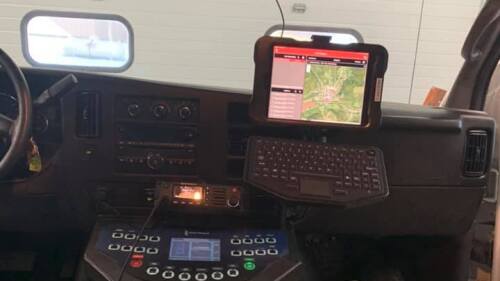
The EMS1 EMS Communications product category features products and information for researching EMS communications.
The EMS1 Airway Management product category features information, product listings and resources for researching airway management.
Patient monitoring plays a critical role in prehospital care, enabling EMS providers to track vital signs, assess patient condition, and detect changes in real-time. Monitoring tools include ECG, pulse oximetry, capnography, and blood pressure tracking. These systems support timely decision-making during transport and handoff to hospital teams. Integrated patient monitoring improves documentation accuracy, care continuity, and patient outcomes. Training on device use and data interpretation is essential. EMS Software is another important topic that explores broader tools used in the field. Explore the articles below for guidance on patient monitoring equipment, protocols, and best practices.
Wellness program software helps fire departments manage health and wellness initiatives for firefighters. These tools support tracking of physical fitness, behavioral health, peer support, medical assessments, and return-to-duty readiness. Wellness program software also helps agencies analyze participation, trends, and outcomes to improve program effectiveness. It supports compliance with NFPA standards and other firefighter health guidelines. Investing in firefighter wellness reduces injuries, sick leave, and burnout.
Dispatch, call centers, and 911 systems are critical components of emergency response. These operations manage call intake, resource allocation, and communication between dispatchers and field units. Efficient systems and well-trained staff help ensure accurate information, quick response times, and coordinated incident management. Technology like CAD, AVL, and integrated radio systems enhances performance and situational awareness. Dispatch, call centers & 911 services must follow state and national standards for operations and training. Emergency Communications is another important topic focused on tools and infrastructure for responder connectivity. Explore the articles below for insights into staffing, protocols, and system improvements.

The EMS1 Inventory & Asset Management Software product category features information, product listings and resources for researching Inventory Management.